
Postural Asymmetry (1) – Why the Human Body Tends to Rotate to the Right
Updated: Feb 11
The human body is not perfectly symmetrical. Natural asymmetry is one of the fundamental characteristics of human anatomy and movement. This unevenness is evident in the arrangement of internal organs, the functioning of the nervous system, and the way we move through space. One of the most common manifestations of this asymmetry is the body’s tendency to rotate to the right.

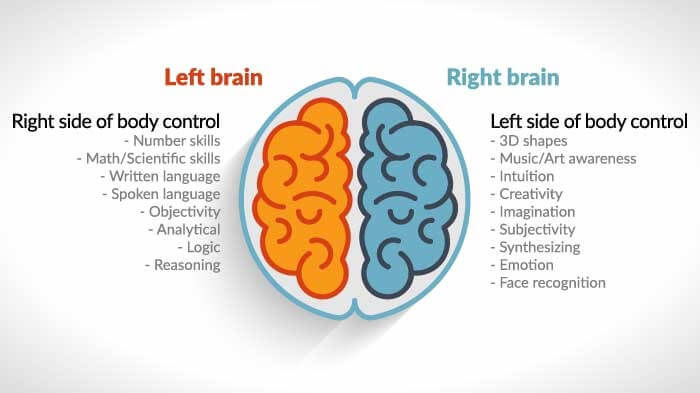
From neurological perspective, the dominance of the cerebral hemispheres plays an important role. In the majority of the population, the left hemisphere is dominant and controls the right side of the body. This dominance is not only reflected in hand preference for writing or object manipulation, but also in the control of fine motor skills, movement planning, and spatial orientation. As a result, a natural preference for the right side develops, which gradually influences posture and movement patterns.
Another important factor is the asymmetrical arrangement of internal organs, with a greater portion of organ mass located on the right side of the body. This includes the liver, part of the large intestine, the gallbladder, and the greater volume and weight of the right lung. This distribution of mass creates a natural mechanical influence on trunk positioning and supports the body’s tendency to orient to the right.
A significant role is also played by the diaphragm itself, the primary muscle of respiration, which is neither structurally nor functionally symmetrical. The right side of the diaphragm is generally more robust and has stronger support due to the position of the liver on the right side of the body. As a result, during both quiet and loaded breathing, the right side tends to be more active and stable. This difference in diaphragmatic function influences the position of the rib cage, spine, and pelvis, creating a subtle but long-term rotational bias toward the right.

An additional contributing factor is the influence of everyday habits. Using a mouse or phone, carrying a bag on one side, driving a car, or participating in sports that favor rotation to one side can further reinforce natural asymmetry. The body adapts very quickly to repeated stimuli and seeks energy-efficient solutions, which often leads to the reinforcement of existing right-side dominance.
How Rightward Rotation Manifests in Posture
One of the typical signs of rightward rotation is a lower position of the right shoulder compared to the left. The right side of the rib cage often appears more “closed,” while the left side is relatively more open and mobile.
This asymmetry has a direct impact on the cervical spine. The head tends to side-bend to the left, often in combination with slight rotation, which increases loading on one side of the neck musculature and limits smooth, balanced head movement.
In the pelvic region, rightward rotation may manifest as the right innominate being slightly higher, while the left side is lower and positioned more anteriorly. This alignment creates a rotational orientation of the trunk to the right and influences the body’s overall axis.
Weight distribution is often shifted predominantly to the outer portion of the right foot, which further reinforces right-sided support and limits effective weight transfer onto the left lower extremity.
Manifestations During Gait and Movement
During walking, rightward rotation is often evident in the position of the right foot, which tends to externally rotate during the step, with the toes pointing slightly outward. This pattern is commonly accompanied by a longer stance phase on the right leg and a reduced willingness of the body to fully transfer weight onto the left side. As a result, movement may appear less fluid and more “twisting” around the right axis.
Are All People Rotated to the Right?
Although the tendency to rotate to the right is very common, it certainly does not apply to all individuals.
There is a significant group of people in whom leftward rotation predominates. This orientation can arise for a variety of reasons and often represents an adaptive or compensatory strategy of the body.
Importantly, a person with predominant leftward rotation will never appear as a perfect “mirror image” of rightward rotation. This is due to the inherent physiological asymmetries of the human body described above, which influence posture regardless of the dominant direction of rotation.
At the same time, even in individuals with rightward rotation, not all of the described signs must necessarily be present. Each body develops its own layers of compensation based on injury history, type of physical loading, movement experience, and lifestyle.
Conclusion
Overall, the human body’s tendency to rotate to the right is not a sign of error or dysfunction, but rather a natural consequence of anatomical and functional asymmetry. Problems arise when this asymmetry becomes excessive and the body loses the ability to function effectively in the opposite directions. The key to healthy movement is therefore to pursuit body’s ability to adapt, vary load, and maintain a balance between stability and mobility on both sides.


Comments